Chris Snyder

Chris Snyder

GOOD NEWS | Vaccines: Not Just for COVID

Everyone was crying inside the big, poorly-lit room in the village of Hope in Burkina Faso.1 Children being vaccinated against a multitude of diseases were shedding tears of fear. Their mothers were shedding tears of thanks, and those of us who were helping in the vaccination process were shedding tears of joy. It was an emotional scene, and many volunteers were moved by the realization that our provision of these vaccinations, at very little cost, would prevent illness and save the lives of many of the children.

Today, most of us in the developed world take vaccines for granted, but the arrival of COVID 19 vaccines was front and centre news, providing relief and hope—and sometimes concern—to people all over the world.

In 1798, an English surgeon Dr. Edward Jenner, developed the concept of vaccination and then created the world's first vaccine for smallpox.2 At that time, smallpox, brought to the new world by European settlers, was killing millions of the Indigenous population of Canada and other Indigenous people throughout the new world. Jenner just wanted to save lives, and he was wildly successful; through his creation he likely saved more lives than anyone before in history. 160 years later, the World Health Organization (WHO) launched a program to eradicate smallpox, and by 1980 the job was done.

Since Jenner's discovery, vaccines have been developed for more than 25 other diseases, including measles, chicken pox, influenza and hepatitis. While smallpox is the only one that has been eradicated by vaccination, polio is just a hair away. While the polio vaccine was discovered in 1953 by Jonas Salk and approved for use in1955, as recently as the early 1980s there were still an estimated 400,000 cases worldwide each year. Now, virtually all the elusive remaining cases (In 2021 less than 75) are in Taliban-held territory in the mountains along the border of Pakistan and Afghanistan.

The polio vaccination initiative is massive, a truly colossal undertaking. Rotary International, WHO and UNICEF have been at it for over 35 years; the Gates Foundation for about 20. To gain some perspective, each year on one day in India, an oral vaccine is given to 125 million children. If the program were to stop, in ten years there could be as many as 200,000 children paralyzed per year.

Vaccines are neither 100% effective nor without controversy, and it requires a massive effort to get the vaccine from the test tube to an arm or mouth. The new COVID vaccines have been extremely effective and have already saved millions of lives. Most vaccines for other diseases are about 70% effective. The scientific evidence of their safety is overwhelming, and most of the distrust comes from people in the grip of misinformation largely spread by out-of-control social media.

The benefits of successful vaccine programs are overwhelming, and the stakes are huge. In addition to hundreds of thousands of deaths (especially among the elderly and poor) the COVID virus disrupted our lives, cost many people their jobs and destroyed their income, bankrupted companies, created political turmoil and created widespread mental health problems among youth.

The world is forever indebted, not only to the scientists who developed the vaccines but also to all those involved in rolling the vaccines out. By working together to prevent a multitude of diseases they help us all, not just the children in Burkina Faso.

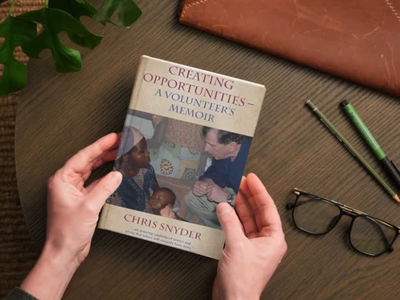
Chris Snyder is the author of several books and several hundred articles on personal finance, Chris' most recent book "Creating Opportunities-A Volunteer's Memoir" describes a lifetime of volunteer experiences, much of it as an active member of the Rotary Club of Toronto and on many not-for-profit boards. Chris is past chair of the Canadian Landmine Foundation, founding chair/current chair of HIP (Honouring Indigenous Peoples) and the Trudeau Centre of Peace, Conflict and Justice as well as past board member of CUSO and the Nature Conservancy of Canada. He organizes and runs hands-on school building trips to the developing world and is the recipient of many volunteer and community service awards, among them the Paul Harris Fellowship Award, the Queen's Gold and Diamond Jubilee Awards, the Rotary Service-Above-Self Award and the Governor General's Sovereign Award for Volunteering. His latest book, "Good News in A Crazy World," will be published by Civil Sector Press in 2024.

[1] With a population of 20 million, Burkina Faso spends $44 US per person on health care annually, compared to Canada's $5,500 and $11,000 in the USA. One of the poorest countries in the world it ranks 185th out of 188 countries in the United Nations Development Programme Human Index. One in ten of the children there die before reaching age five, and the country just can't afford to vaccinate many of the children.

[2] While Edward Jenner is considered in western circles to be the father of vaccines, in fact the Chinese employed a form of inoculation as far back as 1000.

EQUALITY | Women Leaders: Inspiring Inclusion

It was a special day at the Northern School of Peace, Conflict and Justice. The topic in one of the second-year classes was "Women Leaders" to mark International Women's Day on March 8th. Erica, the professor began with a question: "What do the following Institutions have in common: U.S. AID, The International Monetary Fund, The World Food Programme, "The Economist" and the European Commission?"

There was quiet from the 28 in attendance (16 women and 12 men). Then, a hand went up. "They're all political organizations focusing on International Development."

"Partly right," said Erica.

"The leaders are all women," said Hamara.

"Correct," said the professor. "Do any of you know their names and anything about them?" Another long pause, then Hamara spoke again, "I think Cindy McCain is head of The World Food Programme."

"Well," said the professor, "U.S. Aid is headed by Samantha Power, a former key adviser to Barack Obama. Kristina Georgieva from Bulgaria, a mother of four, is head of the International Monetary Fund. She succeeded Christine Lagarde from France who now heads the European Central Bank. The editor-in-chief of "The Economist" is Zanny Minton Beddoes, she's often on CNN on Sunday morning. And the head of the European Commission is Ursula Von der Leyden, a physician, mother of seven and considered by many to be the most powerful and influential woman in the world."

"These women, though not elected politicians, have enormous influence." Now Erica had their attention. "OK, let's flip to Canada," she said. "How many women ran in the last Canadian election and how many were elected?" Guesses flew. "The answer," said Erica, "is 582 ran and 103 were elected, both setting records. Women now make up 30% of Canadian Parliament, and there are 19 female cabinet members out of 39 ... almost half."

"Next question: When did women first get to vote in Canada and who was the first one elected to parliament?"

"1917," said two of the students simultaneously. One added that the first woman elected was Agnes McPhail in 1921.

"Yes," said Erica. "Sticking with elected politicians, can you name three women who are mayors of a major Canadian city?"

"Olivia Chow in Toronto, Jyoti Gondek in Calgary and Valerie Plante in Montreal," came from various students.

"Since you know that one, how many municipalities in Canada have female mayors? Is it: 67, 105, 250 or 310? After many guesses, "250 is correct," said Erica. "And since you have a good read on Canada's elected women, how about how many female mayors there were in 1950?" No one knew the answer, including the professor, but she surmised there were only a handful, including Charlotte Whitton in Ottawa in the 1950s. "She came to office when the mayor died in 1951. She was freely elected in 1953 and served without a break until 1964. Charlotte was colourful, and remembered for many things including the quote, "Women have to do twice as well as men to be thought of as half as good. Fortunately, that is not difficult.'"

The teaching continued to review history's many strong women leaders: Queen Victoria, Indira Gandhi, Eleanor Roosevelt, and Golda Meir, to name a few. More recently, Angela Merkel in Germany and Kamala Harris, Nicki Haley and Hilary Clinton in the US. Some women were young. Jacinda Ardern in New Zealand, became Prime Minister at 37 and is now a visiting fellow at Harvard. Sanna Marin was elected President of Finland at age 34. After years of neutrality, she successfully got Finland admitted into NATO. Not to be forgotten are Liberians Leymah Gbowee, an activist, and Ellen Johnson Sirleaf, the first woman head of government in Africa. They rallied Liberian women to protest the civil war, including among their tactics a sex strike. They were awarded the 2011 Nobel Peace Prize along with female activist Tawakkul Karman from Yemen.

"Do these very capable women leaders inspire you or make you feel you have accomplished nothing?"

"Both!" stated everyone. Professor Erica went on. "In general, women leaders have been extremely capable at making things happen. Kevin Kruse, CEO of LeadX has suggested some reasons why many believe women are more effective leaders than men. Any thoughts?"

"Because they are more trusted than men."

"Because women are better at developing relationships than men."

"These are included," Erica said. "But according to Kruse, research also shows that women have better creative competencies and lower reactive tendencies, better self-awareness, and appear to be more authentic and better aware of systems. They build stronger connections and play for all to win. Men are more likely to adopt a "play not to lose" position."

Erica asked, "Do you need to be in politics to be a leader?"

"No," said Janine. "Oprah, Taylor Swift, Malala, and Greta Thunberg are all influential. In sports, how about Billie Jean King? And there are many women doctors, lawyers, and business leaders. According to FORBES magazine, 10% of the Fortune 500 have women CEOs. Furthermore, there are many outstanding female volunteers and stay-at-home moms who are great leaders. The stay-at-home moms lead in many ways, including passing on values and skills to their children."

"Next question: What 10 countries have the highest gender equality?"

"According to the World Population Review, the top 10 are: Iceland (89%), Finland, Norway, New Zealand, Sweden, Namibia, Rwanda, Lithuania, Ireland, and Switzerland. Two of the top ten are in Africa: Namibia and Rwanda. The worst, not surprisingly, is Afghanistan (44%), followed by Yemen, Iraq, Pakistan, and Saudi Arabia. Where do you think Canada stands?"

Most of the class were baffled. Canada was listed as 24th due to statistics of domestic violence, low political power and economic inequality. One student asked, "How do we help women achieve equality?"

"Education," said Immanuel. They all agreed. Another said, "Change men." There was silence, then an embarrassed laugh. Erica said this reminded her of a U.N. conference on children she attended about 20 years ago. In a breakout session on AIDS, one African man stood up to answer the question, "How do we stop AIDS?" "We men need to change our behaviour," he said, to a loud round of derisive laughter from men and women from all over the world. Someone shouted, "Men will never change," and the man sat down.

"Is it any different now? Will men change?" There was a cold silence in the room, and Erica continued, "Melinda Gates says change will happen only when women move into positions of power in multiple places. Sally Armstrong, a long-time writer/advocate for women's rights, and author of Power Shift, says women's rights have been a long time coming but it is happening. Women all over the world are demanding a better, more equitable place beside men, and they need men by their side. She believes there has never been a better time to be a woman."

Erica concluded the class by quoting the IWD International Days statement, "The theme of the U.N. International Day for Women on March 8 is "Inspire Inclusion." When we inspire others to understand and value women's inclusion, we forge a better world. And when women themselves are inspired to be included, there is a sense of belonging, relevance, and empowerment."

Chris Snyder is the author of several books and several hundred articles on personal finance, Chris' most recent book "Creating Opportunities-A Volunteer's Memoir" describes a lifetime of volunteer experiences, much of it as an active member of the Rotary Club of Toronto and on many not-for-profit boards. Chris is past chair of the Canadian Landmine Foundation, founding chair/current chair of HIP (Honouring Indigenous Peoples) and the Trudeau Centre of Peace, Conflict and Justice as well as past board member of CUSO and the Nature Conservancy of Canada. He organizes and runs hands-on school building trips to the developing world and is the recipient of many volunteer and community service awards, among them the Paul Harris Fellowship Award, the Queen's Gold and Diamond Jubilee Awards, the Rotary Service-Above-Self Award and the Governor General's Sovereign Award for Volunteering. His upcoming book, "Good News in A Crazy World," will be published by Civil Sector Press in 2024.

GOOD NEWS | Thank You for the Music

Avelino was shaking. What was he, a homeless person from Dallas, doing on a stage in Carnegie Hall in front of hundreds of people? In fact, he was just one of 30 homeless people from The Dallas Street Choir on the Carnegie Hall stage about to give a concert. Launched in 2014 by Jonathan Palant in Dallas Texas to bring homeless and severely disadvantaged people together; giving them a community, uniting them through the joy that comes from singing together, and using their voices to give them a voice. Their tagline is Homeless ... not voiceless.

While the makeup of the Dallas Street Choir varies, typically 70% of its members live in shelters and 25% on the street. Over the years, several thousand people have been members. As well as at Carnegie Hall, the choir has been featured on PBS and has given many concerts, including at the Washington National Cathedral and the George W Bush Presidential Library.

Music is a universal language and one of humankind's greatest creations

Among the several hundred types of music, some of the more popular include jazz, classical, opera, folk, soul, hard metal, punk, country and western, hip hop, rap, blues, military, dance, spiritual and of course cultural — the bag pipes of Scotland, the tenor voices of Ireland, and the electrifying drums of Africa.

Music, partly because of the emotions it raises, is often used in therapy. We play music and sing songs. We listen, relax and are inspired by it. We use music as background and a mood setter when we paint, read or write. One person told me of an experience in which African drums were the background while he rode a stationary bike for a fundraiser. At first, the music was inspiring, but as the tempo increased so did the speed of his cycling. He was peddling so hard he had to stop and take breaks every few minutes or so, and by the end his heart was going so fast he thought he was going to have a heart attack.

Music and its lyrics often tell stories that reflect, mark, and even transform the times. Do any of these names and their music conjure up emotions or bring back memories?

Vera Lynn • Frank Sinatra • Elvis Presley • The Kingston Trio • The Beatles • Peter Paul and Mary • Queen • John Denver • Prince • David Bowie • Pete Seeger • Willie Nelson • Dolly Parton • Johnny Cash • Neil Young • Gordon Lightfoot • Joni Mitchell • The Tragically Hip • Fleetwood Mac and Stevie Nicks • Bruce Springsteen • Sarah Brightman and Pavarotti • Ella Fitzgerald and Aretha Franklin • Bob Dylan.

The Rolling Stones have been around for over 50 years and are still going strong. Elton John recently gave his last performance. The so very danceable music of ABBA gave rise to the lively and fun Mama Mia movies and the song that said it all, Thank you for the Music. And Louis Armstrong's singing and trumpet rendition of It's a Wonderful World is a landmark ballad for our times.

The Sunday night that Ed Sullivan showcased Elvis Presley's gyrations as he sang Heartbreak Hotel to millions of us watching goggle-eyed had the Western world mesmerized. Then when he followed with the shockingly long-haired Beatles singing "I Want to Hold Your hand" to their tens of thousands of screaming groupies, our music was changed forever. That left it to muddy Woodstock, which either reflected or set much of the tone for the late 60s and 70s.

In 1985, Live AID involved dozens of musicians and inspired same-day concerts in 150 countries to raise awareness of African poverty and money for famine in Ethiopia. About 1.9 billion people tuned in all around the world that day. And now, forty years later for the Taylor Swift 7-day appearance in Toronto in 2024, the 40,000 tickets for each performance are selling for up to $2500 each.

The operas, symphonies, concertos, waltzes, requiems, oratorios, and chamber music of the classical composers — Tchaikovsky, Beethoven, Brahms, Greig, Mozart, Bach, Puccini, Verdi, Strauss, Chopin and Handel — have been speaking to our souls for hundreds of years, and their ability to inspire shows no signs of fading. In fact, the mood of a movie is often greatly driven by the musical score, regularly drawn on classical and timeless themes. John Williams, the king of movie musical scores, is in his 90s, and still composing and directing.

We've danced and sung the songs, but perhaps it has been the musicals of George and Ira Gershwin, Gilbert and Sullivan, Rogers and Hart, Andrew Lloyd Webber, Stephen Sondheim, Irving Berlin, and Cole Porter that have most powerfully transported us to magical worlds beyond our day-to-day. Military lovers and soldiers are inspired by and have marched to John Philip Sousa's band music. And at the heart of all this western music of our times have been the rock singers and groups, among them Janis Joplin, The Eagles, Rush, Little Richard, Chuck Berry, and Bob Dylan, who won the Nobel Prize in Literature for the words he wrote and stories he told in his songs.

Each culture seems to have its own sounds, much of it for dancing. The music and dancing of the Scottish, Irish, and Russian people, lives and breathes the land of its origin. The Chinese opera, representing ancient rituals, is simply unique. It's impossible to remain still while hearing the drumming and beat of the South American and Caribbean sambas and tangos, and the athletic African drum music — the heartbeat of its people — is electrifying. Ravi Shankar and the Sitar are synonymous with India and have influenced music all over the world. The world's most populous country, India boasts more filmgoers than any other country, and its Bollywood film music has become the country's favourite form of music.

Clearly, we humans are unable to exist without our music, whatever its form. Singing, alone or in a choir, dancing, marching, humming, or playing one of the hundreds of different musical instruments that in our inquiring genius we have created, we are driven to listen and respond to the heartbeat of life. From voices and drums, harmonicas and harps, pianos and sitars, trumpets and cymbals, the wind and the flowing waters, during the frantic crush of the day and in the quiet of our darkest dreams, we pray that the music will never stop, and that the joy and comfort it brings will continue.

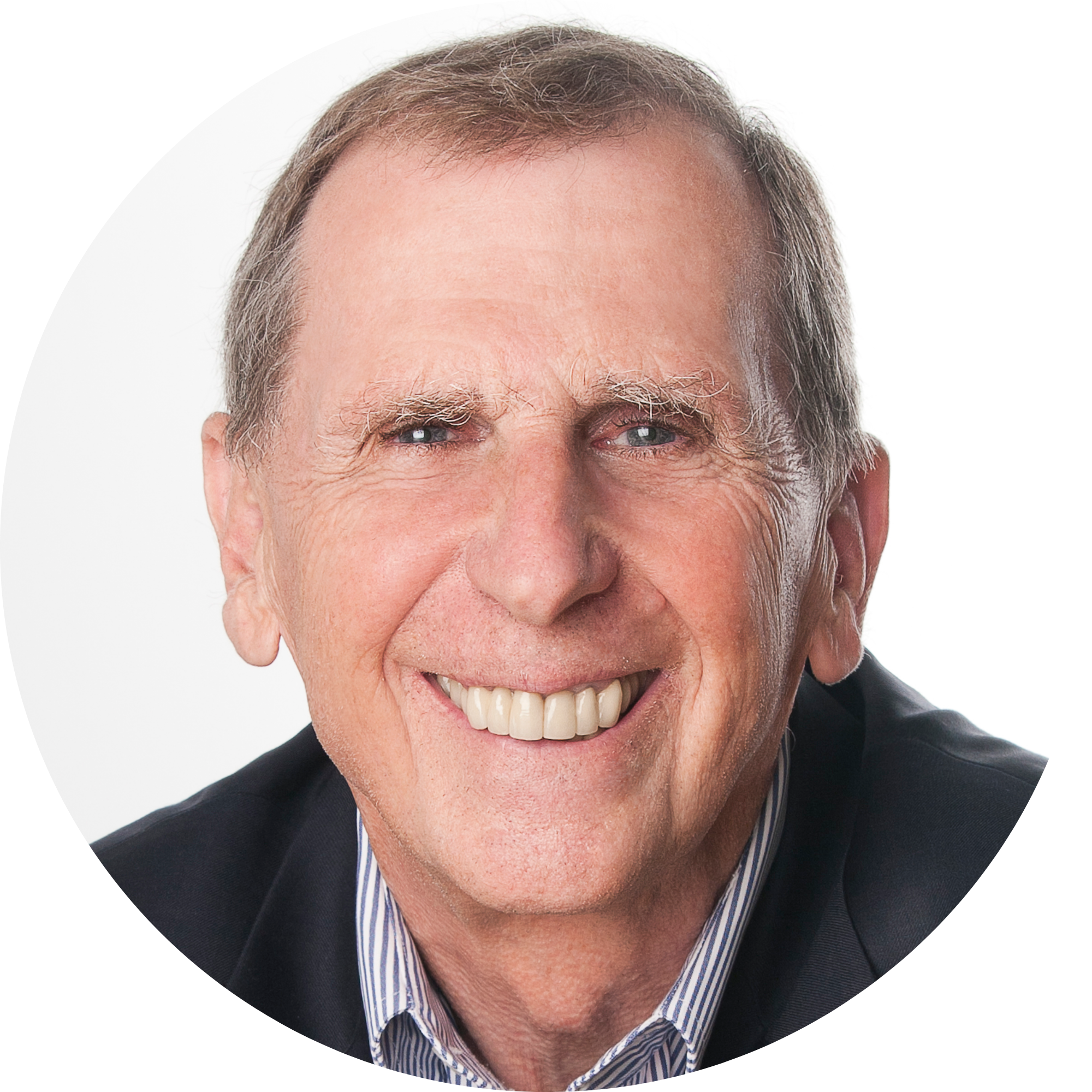
Chris Snyder is the author of several books and several hundred articles on personal finance, Chris' most recent book "Creating Opportunities-A Volunteer's Memoir" describes a lifetime of volunteer experiences, much of it as an active member of the Rotary Club of Toronto and on many not-for-profit boards. Chris is past chair of the Canadian Landmine Foundation, founding chair/current chair of HIP (Honouring Indigenous Peoples) and the Trudeau Centre of Peace, Conflict and Justice as well as past board member of CUSO and the Nature Conservancy of Canada. He organizes and runs hands-on school building trips to the developing world and is the recipient of many volunteer and community service awards, among them the Paul Harris Fellowship Award, the Queen's Gold and Diamond Jubilee Awards, the Rotary Service-Above-Self Award and the Governor General's Sovereign Award for Volunteering. His latest book, "Good News in A Crazy World," will be published by Civil Sector Press in 2024.