
Before we launched our mobile model, we operated as the Single Parent Food Bank of BC. We ran the exact traditional warehouse depot everyone else did, trying to create a dedicated, safe space for single-parent families. But front-line reality quickly dismantled that idea.
We discovered that a vast number of the single parents we served were managing severe physical and developmental disabilities, chronic illnesses, or caring for children with complex medical needs. Creating a dedicated warehouse did not solve their problem because they simply could not get to us. We recognized that continuing to run a stationary depot was just duplicating what existing food banks were already doing but we did create a safe space for Single-parent mom’s dealing with trauma from partner abuse. But we soon realized there was a real service gap.
A key pivot and idea
In 2018, we pivoted entirely to launch our home delivery food hamper service. At the time, there were only three food banks in Canada, including ours, that offered any home delivery for the most vulnerable. When COVID-19 hit, it didn’t change our mission; it validated it. With central warehouses abruptly closing their doors, the pandemic proved to the entire country that home delivery was an essential lifeline.
Yet the moment public health restrictions lifted, the charitable sector executed an immediate retreat straight back to the stationary warehouse queue.
As our work expanded across Metro Vancouver, the delivery gap proved to be much wider than single-parent families. It locked out seniors who rent—where advanced age combined with economic precarity becomes a physical barrier. It excluded individuals undergoing aggressive cancer treatments, people managing debilitating chronic illnesses, and patients returning home from surgery with zero mobility.
None of these individuals can manage the physical reality of getting to a food bank and bringing their groceries home.
David Long, CEO of the Greater Vancouver Food Bank, frequently points out that there is no shortage of food, only a distribution problem. He is right, but only up to his loading dock. The sector has poured resources into moving pallets from corporate donors, wholesalers, and farms into massive regional hubs. But that only solves logistics for the able-bodied.
The actual problem
The real distribution breakdown in Canada is the final mile: getting fresh, targeted nutrition across the threshold of a homebound individual who physically cannot travel. Nutritional quality inside depots has improved. Charities now source more fresh produce, dairy, and lean proteins rather than relying solely on processed, sodium-heavy canned goods.
Yet healthy food sitting inside a stationary warehouse 15 kilometres away is useless to someone who cannot leave their home. This logistical failure is magnified by crushing housing costs. Housing expenses no longer occupy the traditional 30 percent affordability benchmark; in Metro Vancouver, they consume 50 percent, 60 percent, and upwards of 70 percent of household/Benefits income.
A single-parent family on provincial Persons with Disabilities (PWD) benefits receives $2,930.82 per month. Before purchasing food, they face an immediate $1,492 monthly deficit just to reach the Canada Poverty Line (MBM). With average market rent (Metro Vancouver) consuming $2,150—an overwhelming 73.4 percent of their total benefits income—they are left with just $780.82 for the entire month. That translates to an unalterable survival budget of $25.67 a day for two people., forcing a single-parent family living on $25. 67 a day to purchase food and essentials.
These disabilities create a barrier in navigating transit just to stand in a warehouse line is an operational failure for these most vulnerable.
The Numbers Supporting Our Approach
When we isolate the Salvation Army and separate it from the pack, the two numbers will add up perfectly to the $1.47 billion total. Here is the exact mathematical breakdown pulling the Salvation Army out of the 60-bank group:
- The Salvation Army Hoard (1 Entity): $1,284,850,000
- The Remaining Hoard (59 Entities): $194,296,785
- Total Cumulative Hoard (60 Entities): $1,479,146,785
- (Note: The Salvation Army calculation uses the $1.7 billion in reserve funds and estimated $830.3 million total expenses recorded in the master ledger extraction to establish its specific 6-month safety net and resulting hoard).
The math is clean, and the 59 remaining food banks hold a combined excess of $194.2 million.
Total distinct numbered food banks: 101.
Food banks that zeroed out: 41.
Food banks actively hoarding: 60.
Total cumulative liquid hoard: $1.47 billion ($1,479,146,785).
That is the exact same $1.47 billion figure
What makes us different?
Most food banks focus on volume. We focus on value.
We don’t serve more people. We serve people more.
We provide high-quality, targeted nutrition delivered directly to the door—because dignity requires more than just calories. It requires care.
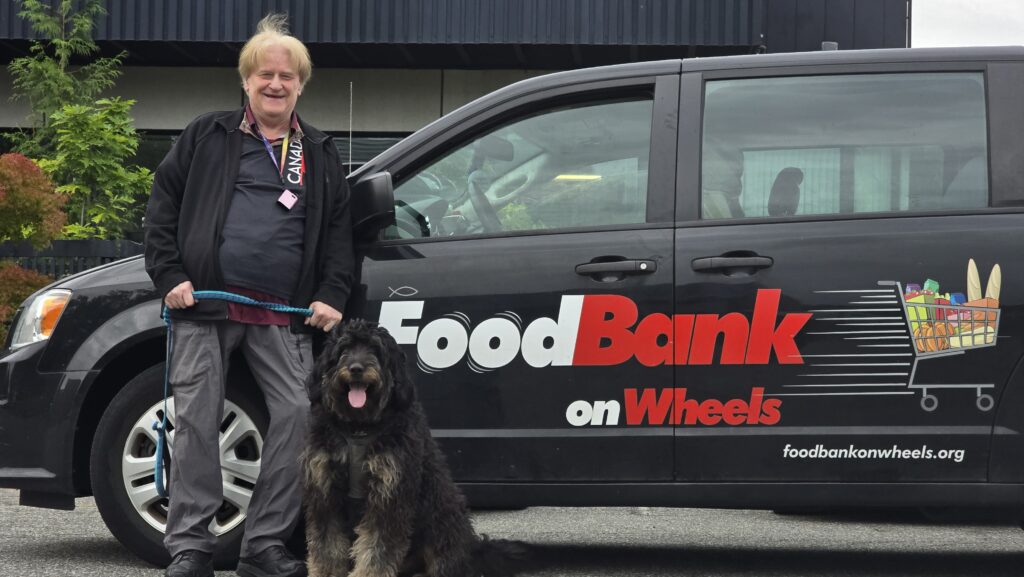
To keep overhead lean, we bypass the massive capital cost of purchasing and maintaining an internal recovery of rescued/donated foods fleet. Through our partnership with the Amazon Local Good program, Amazon provides the professional drivers and delivery vehicles directly to handle 70 percent of our food recovery and logistics to our Food Hub. This allows us to use our Charity vehicle and volunteer drivers to deliver food hampers to those most in need.
We don’t spend donor money building empire assets; we focus exclusively on getting resources to the door.
When major food security coalitions lobby the federal government for pre-budget concessions, arguing that action is needed while 10 million Canadians face food insecurity, they issue an emotional pity donation ask.
Yet our ongoing forensic audit thus far of 101 food bank entities reveals a glaring contradiction.
While 41 food banks have zeroed out their excess reserves by deploying capital directly to the front lines, the remaining 60 entities are actively hoarding a cumulative liquid reserve of $1.47 billion.
When you isolate the numbers, the Salvation Army alone accounts for $1.28 billion of that total, leaving 59 other entities sitting on an excess of $194.2 million in idle cash.
International food security infrastructure in the United States (via Project DASH), the United Kingdom (via HILS), Australia, and New Zealand have long since incorporated mobile, direct-to-door distribution as standard practice. Canada remains an outlier.
Charities must first implement the changes they demand from Ottawa, proving their models work through direct action rather than keeping donors’ money in Investment savings accounts.
Maximizing donor trust means moving past the endless duplication of static depots and deploying donor’s capital to solve the last-mile barrier.
It is time for the Canadian charitable sector to step out of the warehouse and deliver.
Christopher Miroslaw is the Development Director/Co-Founder of Food Bank on Wheels, based in Port Coquitlam, BC. To relieve poverty by operating a free mobile home delivery food bank service to one parent families who are poor, of low income, and in need that are unable to go to a regular food bank in their area due to an illness or disability in the family having transportation issues that prevents them from getting the help they need visiting the local food bank. This service that we will provide fills a service gap that is not currently provided to these families, giving them a free home delivered perishable & non-perishable food hamper that they would not otherwise be able to receive without this service. www.foodbankonwheels.org info@foodbankonwheels.org 604 457-FOOD (3663)