
Your past results tell a story—if you take time to read them
What if your fundraising plan wasn’t built on hope—but on evidence?
Fundraising strategist T. Clay Buck, CFRE, developed a data-informed framework that helps nonprofits build strategy from measurable donor behavior rather than assumptions.
Many nonprofits set annual goals based on what they raised the previous year or on what feels achievable. A strong fundraising plan starts with what your donors have already shown you through their behavior—and builds forward from there.
At its core, this approach follows a simple cycle: Data leads to insight. Insight shapes strategy. Strategy drives tactics. Results send you back to your data.
When this becomes routine, fundraising shifts from reactive to intentional.
Start with clean data
Strong planning begins with reliable information. Before setting goals, review the quality of your donor data. A solid foundation includes:
- Accurate contact records
- Merged duplicate profiles
- Consistent gift coding
- Complete giving history
- Clear donor segments (new, recurring, lapsed, major)
Without clean data, even thoughtful strategies rely on guesswork. With clean data, leadership can make confident decisions about revenue projections and campaign priorities.
Let giving history guide you
Your past results tell a story—if you take time to read them.
Key metrics to review include:
- Total dollars raised
- Number of donors and gifts
- Average and median gift size
- Donor retention rate
- Reactivation rate
- New donor acquisition
Retention, in particular, has a powerful impact on long-term revenue. Strengthening relationships with existing donors is often more sustainable—and more cost-effective—than focusing only on acquisition.
Breaking your annual goal into realistic giving levels can also reveal opportunity. Often, the gap isn’t “more donors,” but deeper engagement and clearer focus.
Turn insight into action
Strategy defines direction. Tactics define execution.
If retention needs improvement, your strategy might focus on stronger stewardship. This could include:
- Enhancing acknowledgment speed
- Launching or strengthening a recurring giving program
- Reviewing engagement metrics monthly
A strong data-informed fundraising plan aligns revenue goals with mission priorities, evaluates staff and system capacity, and sets measurable strategies for the year ahead.
Build a plan you’ll use
Data-informed planning creates clarity across your organization. It gives leadership confidence, staff direction, and donors a more intentional experience.
Fundraising will always rely on storytelling and relationships. But when strategy is grounded in data, those efforts become more focused, measurable, and sustainable.
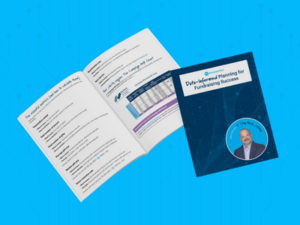
If you’re ready to create your own evidence-based roadmap, start with The Data-Informed Fundraising Planning Guide.