

A compassionate treatise on what can be next for the tired, burned out, poorly paid nonprofit worker
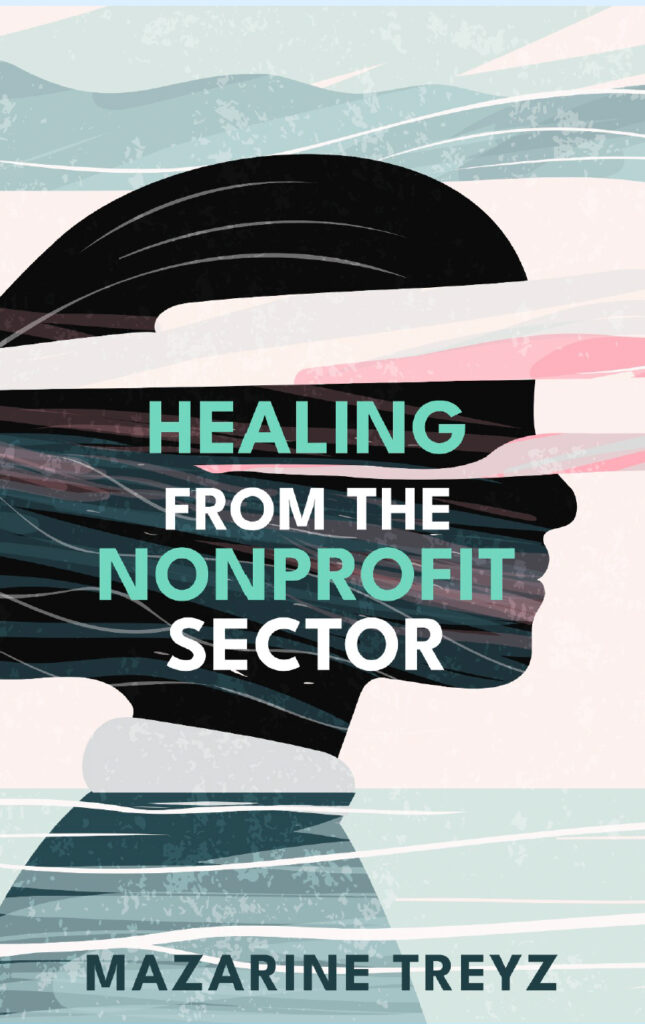
In the opening chapters of Healing from the Nonprofit Sector, Mazarine Treyz offers a brutal insider’s look at what it’s like to work in America right now; bearing witness to the fascism she says is taking root and targeting the nonprofit sector.
The picture painted by Treyz could be considered Biblical in nature, as it includes war (Ukraine, Gaza, Iran), pestilence (covid-19 and the deep cultural rifts in its wake), hellfire (climate-induced wildfires and rising temperatures) and damnation (where grift is good and human souls are treated as disposable.) All, she argues, continue to leave deep trauma in `their wake.
As a professional who has worked to raise money for nonprofits, Treyz also itemizes the systemic problems in nonprofits the world over: low wages, poor leadership, toxic CEOs, lack of consequences for bad behaviour, and the refusal to accept critique. Ultimately, she likens the sector to a cult. The rhetoric of the nonprofit industry, as Treyz calls it, discourages criticism because “we’re under attack,” and encourages low wages because “we are making a difference.” It keeps charity professionals experiencing a feeling of servitude. “Our compassion is exploited and we burn out,” says Treyz.
Is it any wonder, then (Treyz makes her third and ultimate point) that such a system results in its workers becoming sick in mind and body— a sickness that includes grief and defies mindfulness. Vivid descriptions from Treyz’ own work will resonate with readers who have walked the same demoralizing path.
A phoenix rising from the ashes
Then, Treyz swings into the heart of the book, a compassionate treatise on what can be next for the tired, burned out, poorly paid nonprofit worker. The picture she paints is of a phoenix rising from the ashes and includes another way of looking at life, a path out of the sector, and a healing path, one that she has recently trod.
The tragic death of her brother, due to complications from covid, brought things to a head for Treyz. (It is here that we are reminded that 1.2 million Americans died of covid, the most covid deaths of any country in the world.)
My brother died suddenly in August, and I was grieving. I pulled the curtain, closed the door, and went to the woods. There I was alone with my tears, and I let the trees hear my pain.
After putting out more than 1,000 blog posts, 3 books, 10 courses and a weekly newsletter for over a decade, I barely wrote online at all. I just… sat with my grief.
And I started to realize a lot of things I had been involved in were not for me. An activist group. A friendship or two. Assumptions I had made about my family. It felt like the more I was silent, the more I listened to myself, the more the blinders came off. And I could start to really feel what was for me, and what was not.
Every time I thought about going back to the sector, just to do a little work, here and there, a small voice inside me said, “no”. And then it got louder. And louder.
By asking thoughtful questions—some not for the faint of heart, but fairly buzzing with the authenticity of lived experience—she guides the reader through a process of visualizing not just a job outside the nonprofit sector, but a new way of looking at your labour, period. A perspective based on your health, what you need and want, and what brings you peace. (Here, she brings to mind Tricia Hersey and her Nap Ministry, Rest is Resistance.)
In a way, Treyz has produced more than a manual to life after burn-out—although it is a great addition to that canon. She has produced an existential deliverance; a way to stay alive and make a living in a world where an anarchic revolution has changed the centre of gravity for individuals and for nations. The reader is left with the realization that the over-giving of one’s labour has bound millions in the name of a good cause. It is not a righteous act, according to Treyz, but one that serves the status quo.
Gail Picco is currently Campaign Director for The Self-Employed Women’s Initiative, a project of the Canadian Women’s Chamber of Commerce (CanWCC). She is the former editor of The Charity Report and Canadian editor of AFP Global Daily.